ECCV 2026 Workshop · Half-Day · In-Person

Medical Foundation Models
and Benchmarks

Advancing the co-evolution of medical foundation models and benchmarking — from pretraining objectives and multimodal alignment to evaluation protocols that diagnose robustness, generalization, and evidence consistency.

8–9 Sep 2026 In conjunction with ECCV 2026

Why Medical Foundation Models & Benchmarks?

Medical foundation models are rapidly reshaping medical image understanding, enabling stronger generalization and more unified learning across modalities (X-ray, CT, MRI, ultrasound) and tasks such as classification, detection, segmentation, report generation, and multimodal reasoning. A key differentiator of this workshop is the explicit focus on the co-evolution of foundation models and benchmarking — not only building stronger models, but also establishing evaluation protocols that diagnose robustness, cross-site generalization, and evidence consistency.

Pillar I

Foundation Model Design & Learning

Model architectures, large-scale pretraining and self-supervised learning, multimodal learning, alignment, cross-modality reasoning, and efficient fine-tuning and adaptation strategies.

ArchitecturesSelf-supervised learningMultimodal alignmentEfficient fine-tuning
Pillar II

Data, Scaling & Generalization

Global-scale multi-institution datasets, collaboration frameworks and governance, privacy-preserving learning (federated learning), data curation, domain generalization under distribution shift, robustness, safety, and trustworthiness.

Data scalingFederated learningDomain shiftSafety & Trust
Pillar III

Benchmarking & Deployment

Evaluation standards, benchmark design, reproducible protocols, and clinical deployment — developing emerging benchmarks that diagnose robustness, generalization, and evidence consistency for high-stakes clinical settings.

BenchmarksReproducibilityClinical deploymentEvaluation protocols

Important Dates

All deadlines are at 23:59 Anywhere on Earth (AoE). Dates will be announced soon.

Paper Submission
Jun 10'26 11:59 PM (AoE)
Regular track and Nectar track submissions via OpenReview.
Notification
Jul 3'26 11:59 PM (AoE)
Authors notified of acceptance decisions.
Camera-Ready
TBD
Final manuscripts and supplementary materials due.
Date to be announced
Workshop Day
8–9 Sep 2026
Half-day in-person workshop at ECCV 2026.

Invited Speakers

Leading researchers sharing complementary perspectives on medical foundation models, multimodal reasoning, and clinical AI.

Shekoofeh Azizi

Shekoofeh Azizi

Google DeepMind

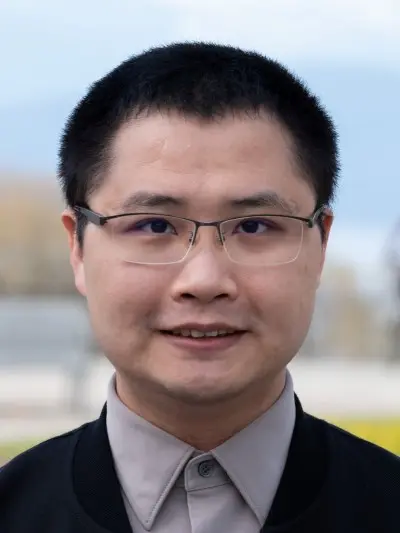
Weidi Xie

Weidi Xie

Shanghai Jiao Tong University

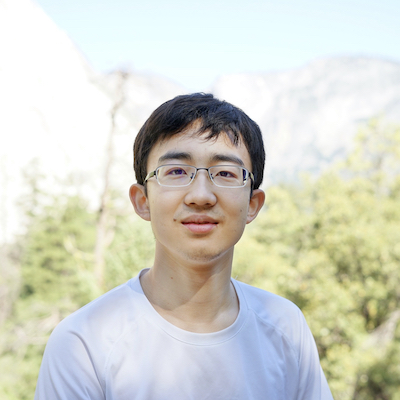
Xiaoxiao Li

Xiaoxiao Li

UBC

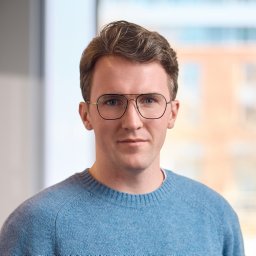
Michael Moor

Michael Moor

ETH Zürich

Workshop Schedule

A half-day program with four invited talks, a poster session with coffee break, best-paper oral spotlight, and a closing panel discussion.

TimeEventType
2:00 PM10 minOpening Remarks
Welcome and workshop overview from the organizers
2:10 PM30 minInvited Talk 1
Speaker to be announced
Keynote
2:40 PM30 minInvited Talk 2
Speaker to be announced
Keynote
3:10 PM60 min☕ Poster Session & Coffee Break
Interactive poster session — up to 30 posters on display
Poster
4:10 PM20 minBest Paper Oral Spotlight
Oral presentations from top-scoring submissions
Oral
4:30 PM30 minInvited Talk 3
Speaker to be announced
Keynote
5:00 PM30 minInvited Talk 4
Speaker to be announced
Keynote
5:30 PM30 minPanel Discussion
Open discussion on the future of medical foundation models & benchmarks
Panel

Submit Your Work

We invite submissions on all topics related to medical foundation models and benchmarking. The workshop features two submission tracks to broaden participation:

Regular Track

Peer-Reviewed Papers

Full papers in ECCV format. All papers will be reviewed via a standard double-blind OpenReview workflow by a dedicated program committee. Conflicts of interest handled per ECCV workshop policies. Accepted papers included in the workshop program for poster presentation.

Submission deadline: Jun 10'26 11:59 PM (AoE)

Nectar Track

Already Published Work

Papers already published and peer-reviewed at major CV/ML conferences or journals. Submissions will not be re-reviewed — the main criteria are topical fit and poster-board availability. Authors submit a link to the paper via the workshop's OpenReview page.

Submission deadline: Jun 17'26 11:59 PM (AoE)

Review Process & Formatting

All submissions undergo double-blind review by program-committee members from academia and industry. Unpublished Regular Track papers that comply with the official ECCV 2026 policies may be included in the ECCV 2026 Workshop Proceedings or presented in a non-archival format at the authors' choice. Nectar Track papers (already published or under review elsewhere) are presented non-archivally only and will not appear in the proceedings. Submissions must be in English, submitted as a single PDF, and follow the official ECCV 2026 author kit (LaTeX template provided). Papers should be 7–14 pages excluding references.

Topics of Interest

Model architectures for medical foundation models
Large-scale pretraining and self-supervised learning
Multimodal learning, alignment, and cross-modality reasoning
Efficient fine-tuning and adaptation strategies
Global-scale, multi-institution datasets and data curation
Privacy-preserving and federated learning
Domain generalization and adaptation under distribution shift
Robustness, safety, and trustworthiness
Benchmark design, evaluation standards, and reproducible protocols
Clinical deployment and integration

Organizers & Advisors

Organizers

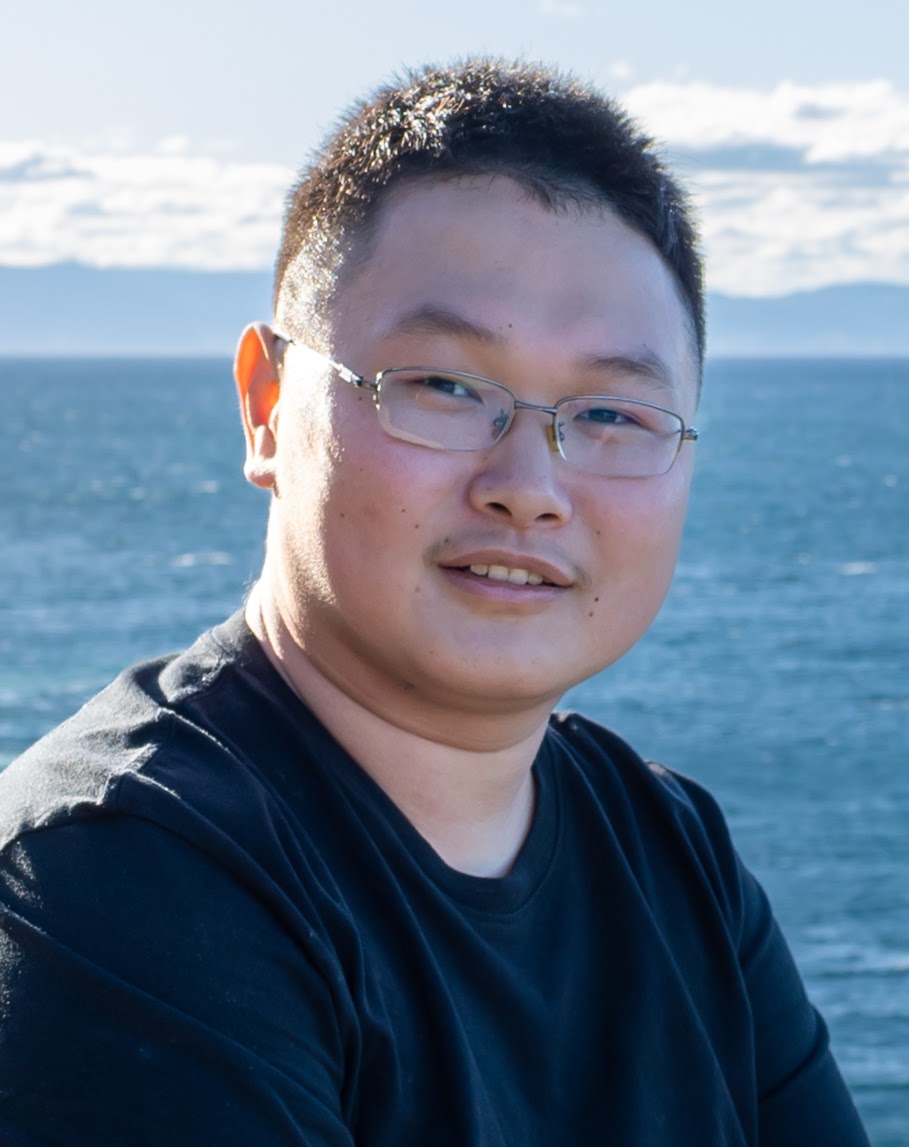
Xiangteng He

Xiangteng He

University of British Columbia

Xiaoxiao Sun

Xiaoxiao Sun

Stanford University

Kun Yuan

Kun Yuan

TU Munich & U. of Strasbourg

Ming Hu

Ming Hu

Monash University & Shanghai AI Laboratory

Congyi Zhang

Congyi Zhang

UT Dallas

Yuhui Zhang

Yuhui Zhang

Stanford University

Benjamin D. Killeen

Benjamin D. Killeen

TU Munich

Advisory Board

Nassir Navab

Nassir Navab

TU Munich

Nicolas Padoy

Nicolas Padoy

University of Strasbourg

Serena Yeung-Levy

Serena Yeung-Levy

Stanford University

Zongyuan Ge

Zongyuan Ge

Monash University

Purang Abolmaesumi

Purang Abolmaesumi

University of British Columbia

Leonid Sigal

Leonid Sigal

University of British Columbia

Alan L. Yuille

Alan L. Yuille

Johns Hopkins University